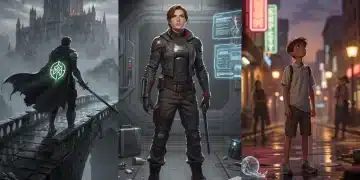
Level Design Art: Top 3 Game Environments 2026 Review
Advertisements
The cutting edge of virtual environments is here, as we analyze three standout games from 2026 that redefine immersive experiences. This review focuses on the groundbreaking Level Design Art 2026, providing critical insights into their creation and impact.
The Art of Level Design: A Review of 3 Games with Exceptional Environments in 2026. is not merely about aesthetics; it is about crafting experiences that resonate deeply with players. This year has seen remarkable strides, pushing boundaries in narrative integration, player agency, and sheer visual spectacle.
Our focus today delves into how these three titles achieve their immersive quality, examining the intricate details that transform mere digital spaces into living, breathing worlds. Understanding these elements is crucial for appreciating the future trajectory of game development.
From architectural prowess to environmental storytelling, these games exemplify what it means to excel in Level Design Art 2026. We explore the techniques and philosophies that underpin their success, offering a comprehensive look at their innovative approaches.
Advertisements
Redefining Immersion: The Evolution of Game Environments in 2026
The year 2026 has witnessed a significant evolution in how game environments are conceived and executed, moving beyond simple backdrops to become integral parts of the player’s journey. This shift emphasizes dynamic spaces that react and adapt, enhancing both narrative and gameplay.
Developers are leveraging advanced technologies to create worlds that are not only visually stunning but also rich in interactive elements and hidden depths. The result is an unprecedented level of immersion, where every corner of the map tells a story or presents a new challenge.
This commitment to intricate detail and thoughtful design is central to the discussion of Level Design Art 2026, setting new benchmarks for what players can expect from their virtual adventures. The boundaries between player and world are increasingly blurred.
Beyond Aesthetics: Functionality and Narrative Integration
Modern level design transcends visual appeal, deeply embedding functionality and narrative elements within the environment itself. This integration ensures that every structure, every landscape feature, serves a purpose, guiding the player subtly through the game’s unfolding story.
The most compelling environments in 2026 games often use visual cues and spatial arrangements to communicate lore, foreshadow events, and hint at solutions to puzzles. This approach creates a more organic and satisfying exploration experience, rewarding observant players.
- Environmental storytelling through visual cues.
- Seamless integration of gameplay mechanics with level design.
- Levels designed to evoke specific emotional responses.
Technological Advancements Driving Level Design
Breakthroughs in rendering, AI, and procedural generation are empowering designers to craft worlds of unparalleled complexity and scale. These technological strides allow for more intricate details and dynamic elements than ever before, enhancing the overall realism and reactivity of game spaces.
The ability to generate vast, diverse landscapes quickly and efficiently, combined with sophisticated AI that populates these worlds with believable inhabitants and challenges, marks a new era. This synergy between art and technology is a hallmark of Level Design Art 2026.
- Advanced rendering techniques for hyper-realistic visuals.
- AI-driven environmental interactions and dynamic changes.
- Procedural generation for vast, diverse, and unique areas.
Case Study 1: “Chrono Echoes” and its Temporal Labyrinth
“Chrono Echoes,” released early in 2026, stands as a monumental achievement in level design, particularly for its innovative use of temporal manipulation within its environments. The game’s levels are not static; they exist across different time periods, forcing players to navigate a complex labyrinth of historical and future iterations of the same space.
This mechanic transforms every area into a puzzle, where actions in one era directly impact the layout and accessibility of another, demanding keen observation and strategic thinking from the player. It is a brilliant demonstration of how Level Design Art 2026 can be a core gameplay element, not just a backdrop.
The developers meticulously crafted each temporal layer, ensuring consistency and logical progression, while also maintaining a high degree of visual fidelity and atmospheric detail. This dedication to coherent, time-bending environments makes “Chrono Echoes” a standout.
Interconnected Eras: A Masterclass in Spatial Puzzles
The core of “Chrono Echoes” lies in its spatially interconnected eras, where the player must constantly shift between past, present, and future versions of a single location. This approach creates intricate environmental puzzles that require understanding cause and effect across time.
A collapsed bridge in one era might be intact in another, or a futuristic device might hold the key to unlocking a path in the distant past. This dynamic interplay showcases a profound understanding of how to integrate narrative and mechanics directly into the environment, a hallmark of excellent Level Design Art 2026.
The game challenges players to think multidimensionally, anticipating how their actions will ripple through time and alter the physical space around them. This innovative design choice elevates the game beyond a simple exploration title, making every traversal a cerebral exercise.
Visual Storytelling Through Chronological Layers
The visual design of “Chrono Echoes” masterfully communicates its temporal narrative, with each era possessing a distinct aesthetic that subtly tells its own story. From ancient ruins to futuristic landscapes, the evolution of the environment is a character in itself, enriching the player’s understanding of the world’s history.
The developers employ intricate details to signify changes, such as decaying architecture, advanced technology, or overgrown vegetation, all contributing to a cohesive yet diverse visual language. This careful attention to detail ensures that the player is always aware of their temporal context, even without explicit UI elements.
This layered approach to visual storytelling highlights the potential of Level Design Art 2026 to convey complex narratives without relying solely on dialogue or cutscenes. The environment becomes a primary vehicle for exposition, inviting players to piece together the history of the world through observation.
Case Study 2: “Aethelgard’s Ascent” and its Vertical Majesty
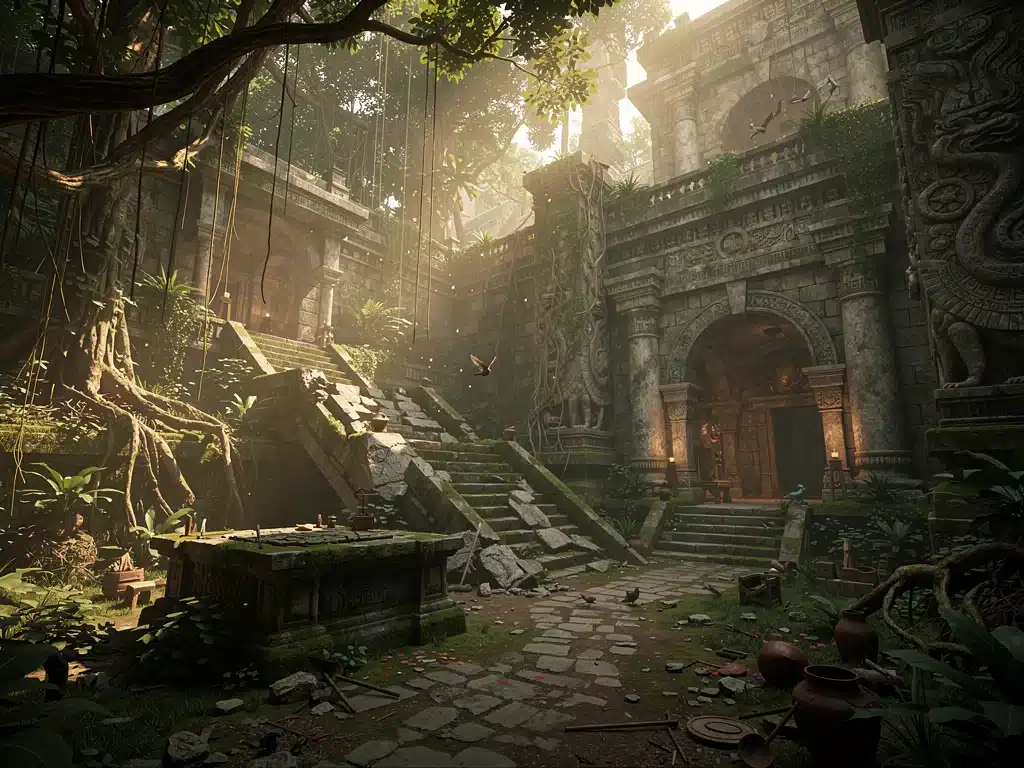
“Aethelgard’s Ascent” captivates players with its breathtaking vertical level design, challenging conventional notions of horizontal progression. The game is set within a colossal, ancient tree-city, where players must navigate sprawling roots, towering branches, and sky-high platforms, all interconnected in a dizzying display of architectural ingenuity.
Every level feels like a living, breathing ecosystem, teeming with diverse flora and fauna, and offering multiple paths for exploration, both upwards and downwards. This verticality is not just a visual gimmick; it fundamentally shapes gameplay, encouraging players to think in three dimensions and consider their surroundings from every angle.
The masterful construction of “Aethelgard’s Ascent” environments demonstrates a bold vision for Level Design Art 2026, proving that innovative spatial arrangements can create profoundly engaging and memorable experiences. Its towering structures invite both awe and strategic contemplation.
Navigating the Sky-High City: A New Dimension of Exploration
The primary draw of “Aethelgard’s Ascent” is its intricate, multi-layered vertical city, which demands a completely new approach to exploration. Players are constantly looking up and down, identifying hidden pathways, secret areas, and strategic vantage points in a way rarely seen in games.
This design encourages a dynamic flow, where players might ascend through dense canopy one moment and descend into subterranean roots the next, always connected by a coherent and believable world structure. It’s a testament to the power of Level Design Art 2026 to redefine player movement and interaction.
- Multi-layered environments encouraging vertical exploration.
- Interconnected pathways offering diverse routes and secrets.
- Gameplay mechanics specifically designed for vertical traversal.
Ecological Harmony and Architectural Brilliance
The environments in “Aethelgard’s Ascent” seamlessly blend natural ecological elements with awe-inspiring architectural structures, creating a sense of organic growth and ancient civilization. The city feels as though it has evolved with the tree itself, a marvel of both natural and constructed beauty.
This harmonious integration is evident in the way structures are built into the tree’s contours, using natural materials and blending with the surrounding biomes. The visual consistency and attention to detail make the world feel incredibly real and lived-in, a prime example of exceptional Level Design Art 2026.
- Organic integration of natural and artificial structures.
- Diverse biomes reflecting different levels of the tree-city.
- Environmental details that enhance the sense of scale and history.
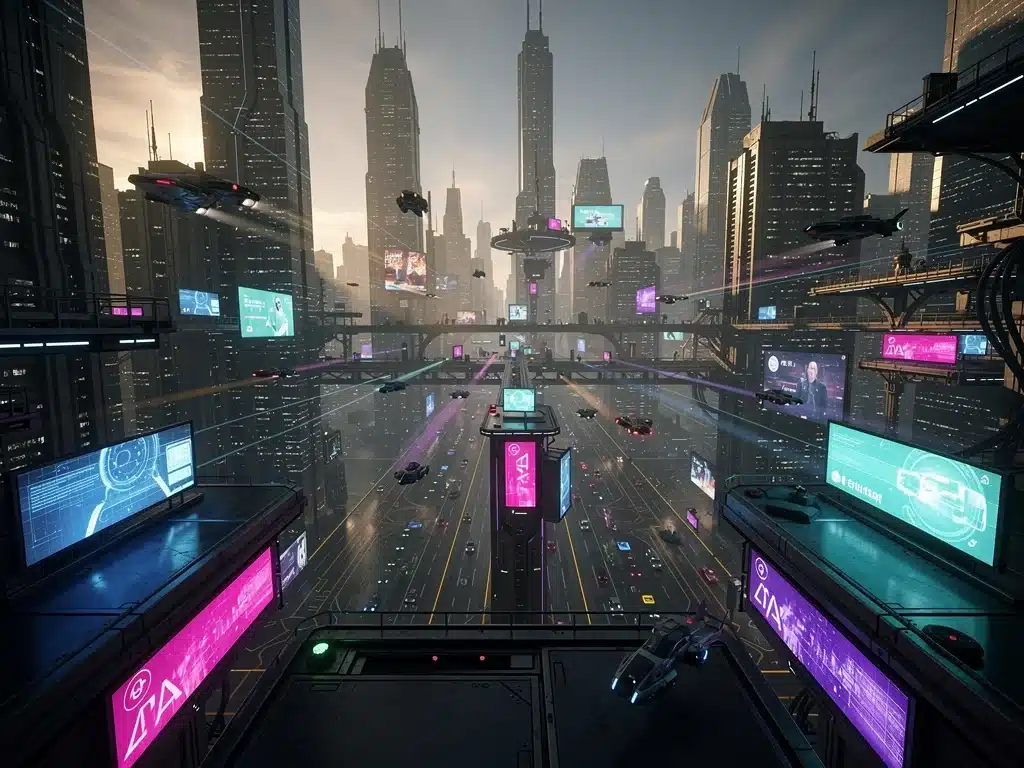
Case Study 3: “Cybernetica Dreams” and its Dynamic Digital City
“Cybernetica Dreams” pushes the boundaries of Level Design Art 2026 with its dynamic, procedurally generated digital city, which constantly shifts and reforms based on player choices and real-time data. This game offers an unparalleled sense of living within a truly reactive virtual space.
The cityscape is a sprawling, neon-drenched metropolis that adapts its layout, challenges, and narrative threads based on the player’s emergent actions and the overarching narrative’s progression. This ensures that no two playthroughs are ever exactly alike, maintaining a high degree of replayability and unpredictability.
This innovative approach to environment design showcases the potential of algorithmic creativity combined with artistic direction, creating a truly next-generation experience. “Cybernetica Dreams” is a testament to the future of Level Design Art 2026, where worlds are not just built but grown.
Procedural Generation Meets Artistic Vision
The central innovation of “Cybernetica Dreams” lies in its ability to blend sophisticated procedural generation with a strong artistic vision, ensuring that while environments are dynamic, they always maintain a cohesive aesthetic and narrative purpose. This prevents the randomness often associated with procedurally generated content.
The developers have implemented a robust system that generates city blocks, districts, and even entire ecosystems based on a set of artistic rules and narrative parameters. This results in environments that feel both fresh and familiar, constantly surprising players while adhering to the game’s established lore.
This balance between algorithmic creativity and human design is a complex undertaking, yet “Cybernetica Dreams” executes it flawlessly, demonstrating a new paradigm for Level Design Art 2026. The city feels like a living entity, evolving in tandem with the player’s journey.
Reactive Environments and Player Agency
The digital city in “Cybernetica Dreams” is highly reactive, with player actions directly influencing the layout, challenges, and even the atmosphere of different districts. This deep level of player agency means that the environment isn’t just a setting; it’s a dynamic participant in the narrative.
For example, a player’s decision to support a certain faction might lead to that faction’s influence expanding, altering the architecture and security of specific areas. This creates a deeply personal and evolving experience, where the world truly feels like it responds to the player’s choices, a key aspect of modern Level Design Art 2026.
This constant feedback loop between player and environment fosters a sense of responsibility and consequence, making every decision feel impactful. The city becomes a reflection of the player’s journey, making each playthrough unique.
The Future of Level Design: Trends and Expectations
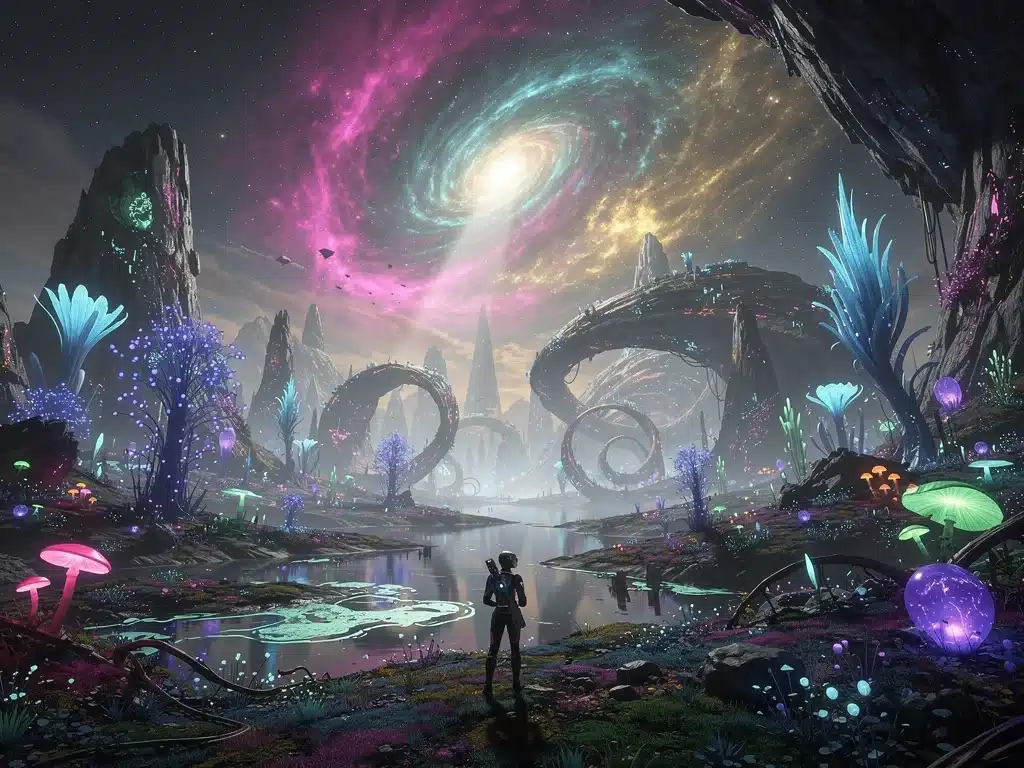
Looking ahead, the trends observed in these three games point towards an exciting future for level design, where immersion and player agency will continue to be paramount. We can expect even greater integration of AI-driven environments, procedural generation, and dynamic storytelling within game worlds.
The emphasis will increasingly be on creating spaces that are not just visually spectacular but also deeply interactive, responsive, and meaningful to the player’s journey. This holistic approach to world-building is the cornerstone of evolving Level Design Art 2026 and beyond.
Developers are likely to invest further in tools and techniques that allow for more rapid iteration and experimentation with environmental mechanics, fostering even more innovative designs. The boundaries of what is possible are continually being pushed, promising richer experiences.
Augmented Reality and Mixed Reality Integration
The burgeoning fields of augmented reality (AR) and mixed reality (MR) are poised to introduce entirely new dimensions to level design. Imagine games where virtual environments seamlessly blend with physical spaces, offering unprecedented levels of immersion and interaction.
This integration could transform how players perceive and interact with game worlds, allowing for experiences that blur the lines between digital and physical realities. The potential for innovative Level Design Art 2026 in AR/MR is immense, from interactive puzzles in real-world settings to dynamic overlays that transform familiar spaces.
While still in nascent stages for mainstream gaming, the groundwork laid by current titles suggests a future where level design extends beyond screens, creating truly pervasive gaming experiences. This expansion will redefine the very concept of a “level.”
Player-Driven World Evolution
The concept of player agency influencing world evolution, as seen in “Cybernetica Dreams,” is expected to become a more dominant trend. Future games will likely feature environments that adapt and change not just based on predetermined choices, but on cumulative player actions, community trends, and even external real-world data.
This could lead to truly unique and personalized game worlds, where every player’s experience is distinct due to the dynamic nature of the environment. This level of responsiveness will deepen player investment and foster a stronger sense of ownership over the virtual space.
Such advanced systems will require sophisticated AI and robust backend infrastructure, but the payoff in terms of immersive and replayable experiences will be substantial. This evolution signifies a key direction for Level Design Art 2026 and its continued growth.
The Impact of Exceptional Level Design on Player Experience
Exceptional level design profoundly impacts the player experience, transforming a mere game into a memorable journey. It’s the silent narrator, the subtle guide, and the challenging adversary, all woven into the very fabric of the virtual world.
When done well, level design fosters a deep connection between the player and the game, enhancing emotional engagement, encouraging exploration, and providing satisfying challenges. It’s the difference between a forgettable space and an iconic landmark within gaming history.
The games reviewed here exemplify this principle, showcasing how thoughtful and innovative Level Design Art 2026 can elevate the entire gaming experience. Their environments are not just backdrops; they are characters in their own right, shaping every interaction.
Creating Memorable Moments and Emotional Resonance
The most effective level designs are those that create lasting impressions, moments of awe, fear, or triumph that stay with players long after they’ve finished the game. These moments are often facilitated by carefully constructed environments that evoke specific emotional responses.
Whether it’s the grandeur of a vast landscape, the claustrophobia of a tight corridor, or the tension of a puzzle room, the environment plays a crucial role in shaping the player’s emotional journey. This emotional resonance is a key indicator of masterful Level Design Art 2026.
The careful placement of light, shadow, sound, and visual details all contribute to this emotional impact, making the virtual world feel more alive and personal. It’s about crafting an atmosphere that complements and enhances the narrative.
Encouraging Exploration and Discovery
A well-designed level inspires curiosity, inviting players to delve deeper, uncover secrets, and explore every nook and cranny. The environments become playgrounds for discovery, rewarding those who venture off the beaten path with hidden lore, valuable items, or new narrative insights.
The best examples of Level Design Art 2026 subtly guide players through visual cues and environmental breadcrumbs, encouraging organic exploration rather than explicit directions. This fosters a sense of agency and accomplishment, as players feel they are truly discovering the world on their own terms.
This emphasis on exploration adds significant replay value, as players can return to familiar spaces and find new details or pathways they missed previously. It transforms passive observation into active engagement, making the world a constant source of wonder.
Challenges and Innovations in Crafting Virtual Worlds
Creating these exceptional virtual worlds comes with a unique set of challenges, from balancing artistic vision with technical constraints to ensuring optimal performance across diverse hardware. Developers constantly innovate to overcome these hurdles, pushing the boundaries of what’s possible.
The sheer scale and complexity of modern game environments demand sophisticated tools and workflows, requiring multidisciplinary teams to collaborate seamlessly. This collaborative effort is crucial for bringing ambitious visions for Level Design Art 2026 to fruition.
Innovations in asset creation, optimization techniques, and development pipelines are continually refining the process, making it possible to realize increasingly detailed and immersive worlds. The pursuit of perfection is an ongoing journey in game development.
Balancing Artistic Vision with Technical Constraints
One of the most significant challenges in level design is striking the right balance between a grand artistic vision and the practical limitations imposed by technology and development resources. Designers must often make difficult choices to ensure the game runs smoothly without sacrificing creative integrity.
This involves clever optimization techniques, efficient asset management, and sometimes, reimagining parts of the design to fit within performance budgets. The ability to innovate within these constraints is a hallmark of skilled Level Design Art 2026.
Developers use a variety of strategies, from modular design to advanced culling systems, to achieve stunning visuals and complex environments without overwhelming system resources. It’s a constant dance between ambition and practicality.
The Role of Iteration and Player Feedback
Level design is an iterative process, heavily reliant on continuous testing and player feedback to refine and perfect environments. Early prototypes often undergo significant changes based on how players interact with the space, ensuring optimal flow, challenge, and engagement.
This feedback loop is invaluable for identifying areas that might be confusing, frustrating, or simply not engaging enough, allowing designers to make necessary adjustments. The best examples of Level Design Art 2026 are often the result of countless hours of refinement based on real-world player experiences.
Alpha and beta testing phases are critical for gathering this data, providing insights that might be missed during internal development. This player-centric approach ensures that the final product is as polished and enjoyable as possible.
| Game Title | Key Level Design Innovation |
|---|---|
| Chrono Echoes | Temporal manipulation of environments for complex spatial puzzles. |
| Aethelgard’s Ascent | Vertical city design emphasizing multi-dimensional exploration. |
| Cybernetica Dreams | Dynamic, procedurally generated city reacting to player choices. |
| Overall Trend | Increased immersion, player agency, and narrative integration. |
Frequently Asked Questions About Level Design Art 2026
Exceptional Level Design Art 2026 is defined by environments that seamlessly integrate narrative, gameplay mechanics, and stunning visuals. It involves creating spaces that are not only aesthetically pleasing but also functional, fostering player agency, encouraging exploration, and evoking strong emotional responses, making the world feel alive and reactive to player actions.
Developers achieve immersive environments through a combination of advanced technologies like high-fidelity rendering and procedural generation, coupled with meticulous artistic direction. They focus on environmental storytelling, dynamic elements that react to player input, and intricate details that build a coherent and believable world, pushing the boundaries of Level Design Art 2026.
Player feedback is crucial in refining level design. Through extensive testing, developers gather insights on player interaction, navigation, and engagement, allowing them to identify areas for improvement. This iterative process ensures levels are intuitive, challenging, and enjoyable, directly contributing to the quality of Level Design Art 2026 and the overall game experience.
While not universally applicable, procedurally generated levels are certainly a significant part of the future, especially when combined with strong artistic direction, as seen in “Cybernetica Dreams.” They offer immense potential for creating vast, dynamic, and highly replayable environments. This approach allows for endless exploration and unique experiences, pushing the boundaries of Level Design Art 2026.
These games set new benchmarks by demonstrating innovative approaches to spatial puzzles, verticality, and player-reactive environments. They inspire future developers to explore deeper narrative integration, enhanced player agency, and the potential of emerging technologies like AR/MR in crafting virtual worlds. Their contributions are pivotal to the ongoing evolution of Level Design Art 2026.
Perspectives
The review of these three games highlights a pivotal moment in the evolution of Level Design Art 2026. Developers are increasingly focused on creating truly interactive and immersive worlds that transcend mere visual appeal, integrating narrative and gameplay in unprecedented ways. This trend suggests a future where game environments are not just settings but active participants in the player’s journey.
Looking ahead, we anticipate further innovations in procedural generation, AI-driven environment dynamics, and the integration of emerging technologies like AR and MR. These advancements will continue to blur the lines between virtual and reality, offering players experiences that are deeply personal and endlessly replayable. The commitment to pushing creative and technical boundaries is clear.
As the industry progresses, the focus will remain on fostering deeper emotional connections and greater player agency within these meticulously crafted digital spaces. The benchmarks set by titles like “Chrono Echoes,” “Aethelgard’s Ascent,” and “Cybernetica Dreams” will undoubtedly inspire the next generation of designers to redefine what is possible in Level Design Art 2026 and beyond.