Platformers Reimagined: Top 2 Innovative Titles of 2026
Advertisements
Platformers Reimagined 2026 explores how new mechanics, environmental systems, and player-focused design are reshaping the platformer genre in the United States.
Developers are experimenting with gravity, time manipulation, interactive environments, and more flexible progression systems to create platformers that feel familiar while introducing new strategic possibilities.
This review examines two titles presented as examples of this direction, highlighting their core mechanics, level-design concepts, and the broader trends influencing modern platform games.
The Evolution of Platformer Mechanics in 2026
Platform games in 2026 are increasingly moving beyond traditional running and jumping. Environmental interaction, physics-based challenges, and character abilities are becoming more important parts of the overall experience.
Advertisements
Instead of relying only on linear progression, many modern designs encourage exploration through alternate routes, interconnected areas, and puzzles that require players to understand how different systems interact.
This approach gives Platformers Reimagined 2026 greater mechanical depth while preserving the timing, movement, and precision that have traditionally defined the genre.
Innovation in Environmental Interaction
Environmental interaction now extends beyond basic switches and movable platforms. Players may need to change terrain, influence gravity, manipulate objects, or use specific abilities to alter the world around them.
- Dynamic terrain deformation based on player actions.
- Interactive elements that respond to specific character abilities.
- Puzzles involving light, sound, physics, or elemental forces.
These systems can transform individual levels into interconnected puzzles in which movement and problem-solving work together rather than functioning as separate gameplay elements.
The result is a greater emphasis on observation and experimentation, giving players more opportunities to discover different approaches instead of memorizing a single sequence of jumps.
Redefining Player Agency
Player agency is also becoming more prominent through customizable abilities, alternative paths, optional challenges, and progression systems that allow different approaches to the same obstacle.
Skill upgrades can influence movement, combat, or environmental interaction, giving players greater control over how they explore levels and respond to increasingly complex challenges.
These systems can make each playthrough feel less rigid, supporting the broader design philosophy associated with Platformers Reimagined 2026.
Aetherbound Echoes: A New Dimension of Gravity Play
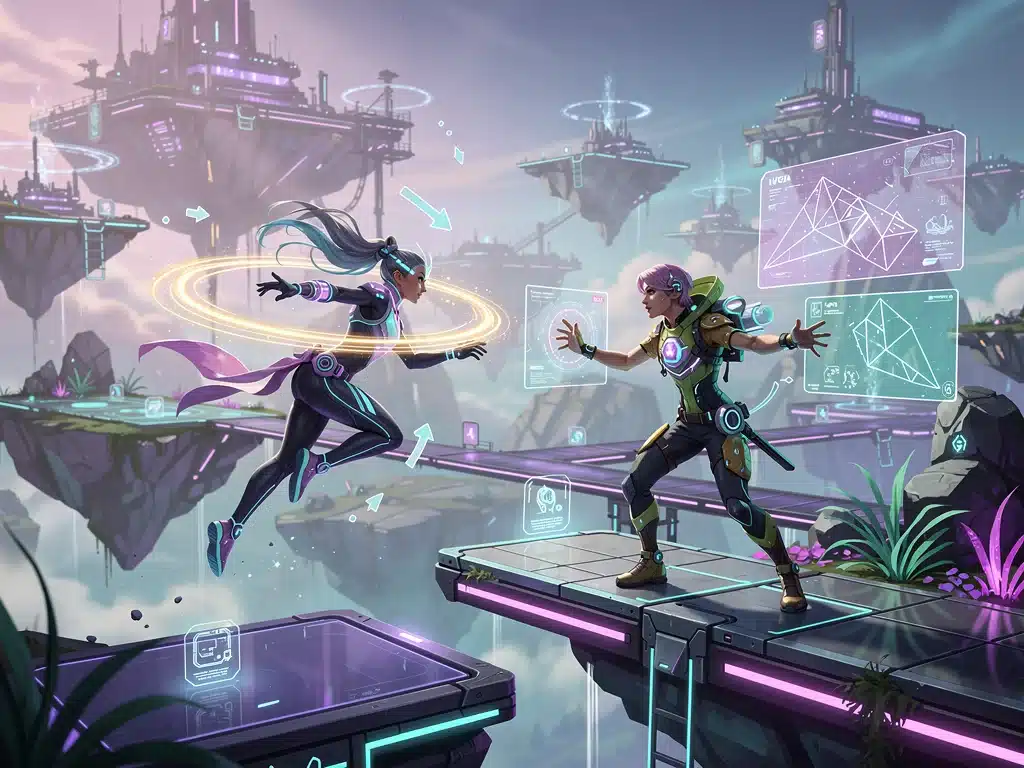
“Aetherbound Echoes” illustrates the concept of gravity-based platforming by placing control of gravitational direction at the center of movement, navigation, and environmental problem-solving.
Instead of treating gravity manipulation as an occasional ability, the concept integrates it into traversal across floating structures, unconventional surfaces, aerial challenges, and physics-oriented puzzles.
This type of design represents the experimental direction associated with Platformers Reimagined 2026, where one central mechanic can influence nearly every aspect of a level.
Gravity-Defying Level Design
The level design of “Aetherbound Echoes” is built around movement across different planes. Floors, walls, ceilings, and suspended structures can all become possible routes depending on the direction of gravity.
Localized gravity zones and inverted sections can introduce new challenges throughout the experience, requiring players to reconsider familiar spaces from different physical perspectives.
The narrative also connects with the central mechanic through a story involving unstable environments and artifacts capable of influencing the balance of the game world.
Chrono-Shift Chronicles: Weaving Time into the Fabric of Platforming
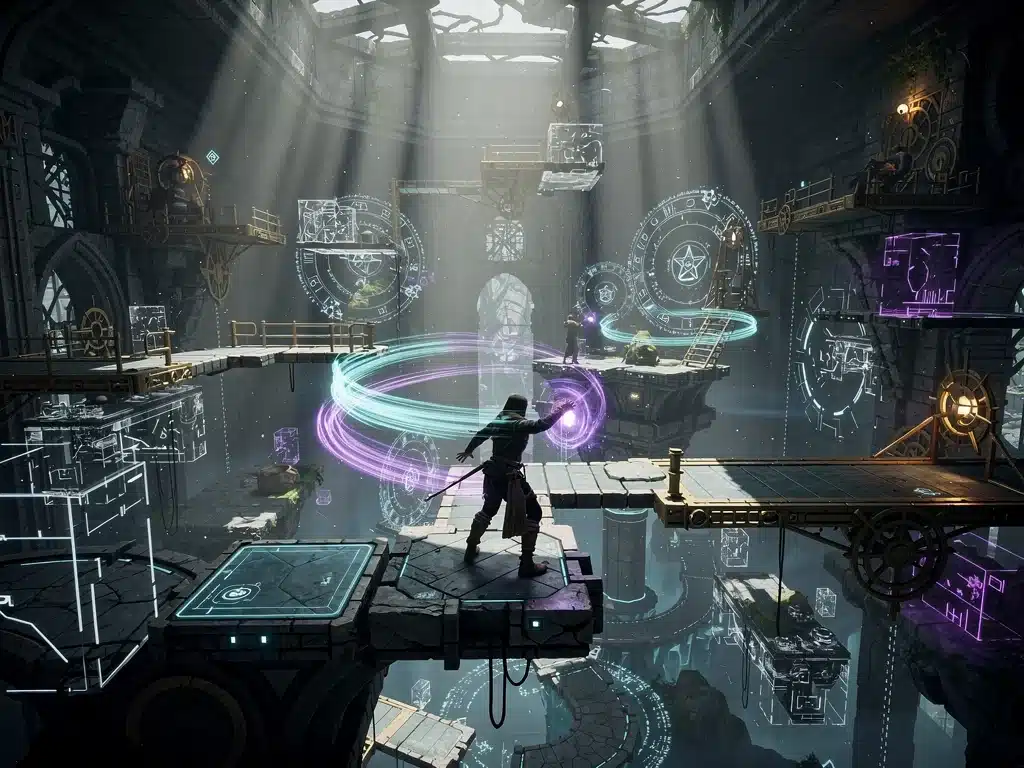
“Chrono-Shift Chronicles” approaches platforming through time manipulation, allowing players to rewind, pause, or accelerate selected environmental elements while navigating different areas.
These mechanics can create temporary routes, restore objects to earlier states, correct movement mistakes, and synchronize multiple events to overcome increasingly complex obstacles.
By combining traditional movement with temporal problem-solving, the concept reflects another direction explored by Platformers Reimagined 2026.
Temporal Puzzle Design
Temporal puzzles focus on the relationship between actions and consequences. Players may first observe an event, manipulate its timing, and then use the resulting environmental change to move forward.
- Rewinding specific objects to previous states.
- Creating temporary platforms by freezing objects in time.
- Synchronizing character actions across different temporal instances.
This structure allows puzzles to evolve beyond basic timing challenges by requiring players to understand how several actions influence one another across different moments.
As new temporal interactions are introduced, players must continually adapt their strategies rather than depending on one repeated solution throughout the game.
Narrative Through Time Travel
The narrative follows a character attempting to repair a fractured timeline while moving through different periods and environments affected by temporal instability.
Each period can introduce distinct visual styles, environmental elements, and gameplay conditions while retaining a consistent platforming structure across the overall experience.
Connecting level changes directly to the story helps time manipulation function as both a gameplay system and a narrative device rather than as an isolated mechanic.
Impact on the Gaming Landscape
Experimental platformers can influence game design beyond their own genre by demonstrating how one unusual mechanic can support traversal, puzzles, narrative progression, and environmental interaction simultaneously.
This approach reflects continued interest in games that combine recognizable structures with distinctive systems rather than relying exclusively on familiar sequels or minor mechanical revisions.
The ideas associated with Platformers Reimagined 2026 may therefore influence future puzzle games, action titles, and adventure experiences that emphasize systemic interaction.
Player Reception and Critical Discussion
Innovative platformers often attract attention when their central mechanics provide players with meaningful new ways to move through and interpret familiar types of environments.
Community discussions around these games commonly focus on puzzle solutions, movement strategies, hidden routes, mechanical experimentation, and the discovery of alternative approaches.
Long-term reception ultimately depends on execution, accessibility, level variety, technical stability, and whether the core mechanic remains interesting throughout the full experience.
Future Trends in Platformer Development
Future platformers are likely to continue exploring physics systems, environmental storytelling, interconnected levels, adaptive abilities, and mechanics that give players multiple ways to approach challenges.
Developers may also place greater emphasis on responsive worlds where objects and environments react persistently to movement, choices, and previously completed actions.
These developments suggest that Platformers Reimagined 2026 represents part of a broader movement toward more systemic and interactive platform-game design.
Virtual and Augmented Reality Possibilities
Virtual and augmented reality could introduce additional ways to experience platforming by giving players more direct control over spatial interaction and environmental manipulation.
Gravity changes, object positioning, perspective shifts, and temporal interactions could potentially be controlled through physical gestures or changes in the player’s viewpoint.
These technologies are not necessary for innovation, but they offer another area developers can explore as platforming becomes increasingly focused on space and interaction.
Challenges and Opportunities for Developers
Complex mechanics can create significant development challenges because physics, time manipulation, environmental reactions, and unconventional movement systems require extensive testing.
Developers must also balance mechanical depth with accessibility so that players can gradually understand new systems without facing unnecessary confusion during the opening stages.
When these elements are carefully integrated, innovative platformers can distinguish themselves through memorable gameplay rather than depending only on visual presentation.
The Legacy of Innovation from 2026
The most influential platformers are often those that reconsider familiar rules and demonstrate that established genres can support entirely new forms of movement and interaction.
Mechanics involving gravity, time, dynamic environments, and player-controlled systems can provide future developers with new foundations for experimentation and iteration.
For that reason, the ideas explored through Platformers Reimagined 2026 may remain relevant as platform games continue evolving beyond traditional genre conventions.
| Key Innovation | Brief Description |
|---|---|
| Gravity Manipulation | Player-controlled gravity changes movement, orientation, and level navigation. |
| Temporal Mechanics | Time control supports puzzles, traversal, and environmental transformation. |
| Dynamic Environments | Levels react to player abilities and changes in environmental conditions. |
| Narrative Integration | Gameplay mechanics are connected directly with story progression and world design. |
Frequently Asked Questions About Innovative Platformers
Innovative platformers can introduce mechanics that fundamentally change movement, exploration, or puzzle-solving. Gravity control, time manipulation, responsive environments, and flexible progression systems are examples of mechanics that can expand traditional platform-game design.
“Aetherbound Echoes” is centered on gravity-based movement and environmental navigation, while “Chrono-Shift Chronicles” focuses on manipulating time to change objects, routes, and puzzle conditions. Both illustrate concepts associated with Platformers Reimagined 2026.
Yes. Complex systems can remain accessible when mechanics are introduced gradually, controls remain consistent, and early levels allow players to experiment before requiring advanced combinations of abilities.
Mechanics involving physics, time, and interactive environments can encourage developers to rethink traditional level structures and create more systemic approaches to movement, puzzles, and exploration.
Developer interviews, official game pages, gameplay demonstrations, industry publications, and detailed design analyses can provide additional information about new platforming mechanics and development trends.
Looking Ahead: The Future of Platformers
The continued experimentation seen in platform-game design suggests that the genre still has considerable room to evolve through new mechanics, interactive worlds, and alternative progression structures.
Future titles may combine precision movement with increasingly sophisticated environmental systems, giving players more opportunities to experiment rather than follow one predetermined solution.
As these ideas develop, Platformers Reimagined 2026 can serve as a useful lens for understanding how traditional platforming concepts are being reconsidered.